
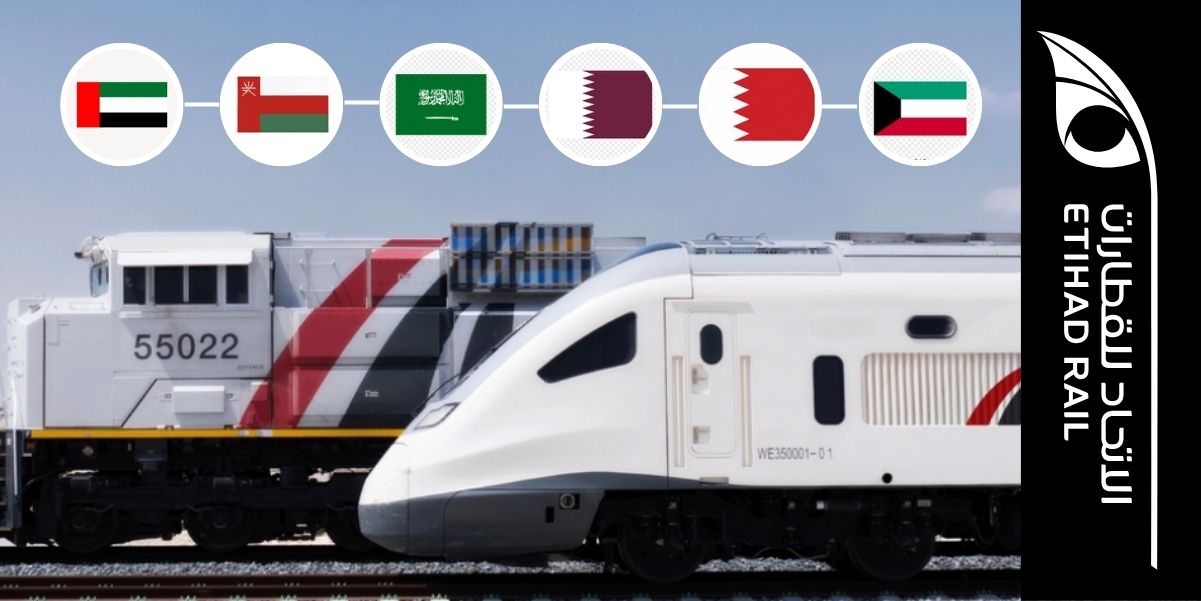
Etihad Rail
As the UAE accelerates the expansion of its national railway network, one question is gaining regional attention:
The short answer is yes — Etihad Rail is designed as part of a wider GCC railway vision, but full connectivity will be achieved gradually through phased regional integration.
What Is Etihad Rail and Why It Matters Regionally
Etihad Rail is the UAE’s national railway network, built to connect all seven emirates through a modern freight and passenger rail system.
Beyond domestic travel, Etihad Rail plays a strategic role in positioning the UAE as a central rail hub within the Gulf region, linking ports, industrial zones, and trade corridors.
Understanding the GCC Railway Network
The GCC Railway Network is a long-term regional infrastructure project aimed at connecting:
Saudi Arabia, UAE, Oman, Kuwait, Bahrain, Qatar
When completed, this unified railway system is expected to span more than 2,000 kilometers, enabling seamless cross-border movement of goods and passengers across the Gulf.
Etihad Rail represents the UAE’s official contribution to this regional network.
How Etihad Rail Is Built for GCC Connectivity
Etihad Rail has been developed using international railway standards to ensure compatibility with neighboring GCC rail systems.
Key technical features enabling cross-border links:
• Standard gauge tracks (1,435 mm)
• European Train Control System (ETCS Level 2)
• Dual-use freight and passenger infrastructure
• Direct access to ports, logistics hubs, and free zones
This design allows future GCC connections without major structural changes.
UAE–Oman Rail Connection: Hafeet Rail
The most advanced cross-border extension linked to Etihad Rail is Hafeet Rail, a joint UAE–Oman railway project.
This 238-kilometer rail corridor will connect Sohar Port in Oman with Abu Dhabi, supporting both freight and passenger services.
Hafeet Rail is considered the first operational step toward full GCC rail integration.
Future Connection With Saudi Arabia
Saudi Arabia is a critical pillar of the GCC railway vision, and Etihad Rail’s northern routes are strategically planned to enable future links with Saudi rail infrastructure.
A UAE–Saudi rail connection would unlock high-impact benefits:
• Faster trade routes between the two largest Gulf economies
• Cross-border passenger travel between major cities
• Reduced reliance on road freight
While timelines depend on regional coordination, Etihad Rail is technically ready for this connection.
Can Passengers Travel Across the GCC by Train?
Once GCC rail integration is completed, Etihad Rail could enable cross-border passenger routes such as:
• Abu Dhabi – Muscat
• Dubai – Riyadh
• Dubai – Doha (via Saudi Arabia)
This would offer a safe, efficient, and sustainable alternative to road travel and short-haul flights across the region.
Freight Connectivity: The Biggest Economic Impact
Freight rail is expected to be the largest beneficiary of GCC connectivity.
By linking Etihad Rail with regional networks, goods can move seamlessly between ports, factories, free zones, and markets across the Gulf.
Major benefits include:
• Lower logistics and transportation costs
• Faster regional supply chains
• Reduced border congestion
• Lower carbon emissions
Challenges to Full GCC Rail Integration
Despite strong progress, full GCC railway connectivity faces several challenges:
• Cross-border customs and immigration coordination
• Regulatory alignment between GCC states
• Synchronizing construction timelines
However, bilateral projects like Hafeet Rail indicate that regional coordination is actively improving.
Current Status of Etihad Rail
• Nationwide freight operations are fully operational in the UAE
• Passenger services are scheduled to launch in 2026
• Cross-border rail links are under development
Etihad Rail is already positioned as the backbone for future GCC railway connectivity.
Final Verdict: Will Etihad Rail Connect All GCC Countries?
Yes — Etihad Rail is fundamentally designed to connect with the entire GCC railway network.
While full Gulf-wide connectivity will be achieved in phases, projects with Oman and future links with Saudi Arabia place Etihad Rail at the center of the GCC’s transportation future.
When complete, this network will redefine trade, travel, and economic integration across the Gulf region.